Bone Charcoal Color Case Hardening
Traditional Bone Charcoal Case Hardening for Classic Arms
Traditional bone charcoal color case hardening was used on receiver frames, hammers, levers, sideplates, and other components found on classic Winchester, Marlin, Colt, and similar firearms. The process produces the distinctive blue, gray, straw, and mottled colors associated with many late-19th- and early-20th-century rifles, shotguns, and revolvers.
Historically, case hardening served a metallurgical purpose as well as a decorative one. The process involves packing your firearm parts into a crucible with specific ratios of wood and bone charcoal, which are then heated to specific temperatures and held for a predetermined amount of time. At which point the parts are removed from the furnace and quenched. The resultant finish is one which has the distinct colors with a hard surface while leaving the core malleable.
True Bone & Wood Charcoal Processing (No Torch Washes)
Authentic period-correct color case hardening requires a traditional bone-and-wood-charcoal process. This is fundamentally different from cosmetic torch coloring. There are also other surface treatments that try to imitate real case coloring, and while they can have some form of the colors associated with the real process, they have none of the benefits from a hardened surface.
The hardened steel surface is what gives soft un-tempered steels the ability to withstand continued use from shooting without wearing out.
Whether your project involves a complete firearm restoration or individual receiver and action components, we evaluate the parts, their condition, and the desired result before recommending the appropriate scope of work.
Examples of Traditional Bone Charcoal Case Hardening
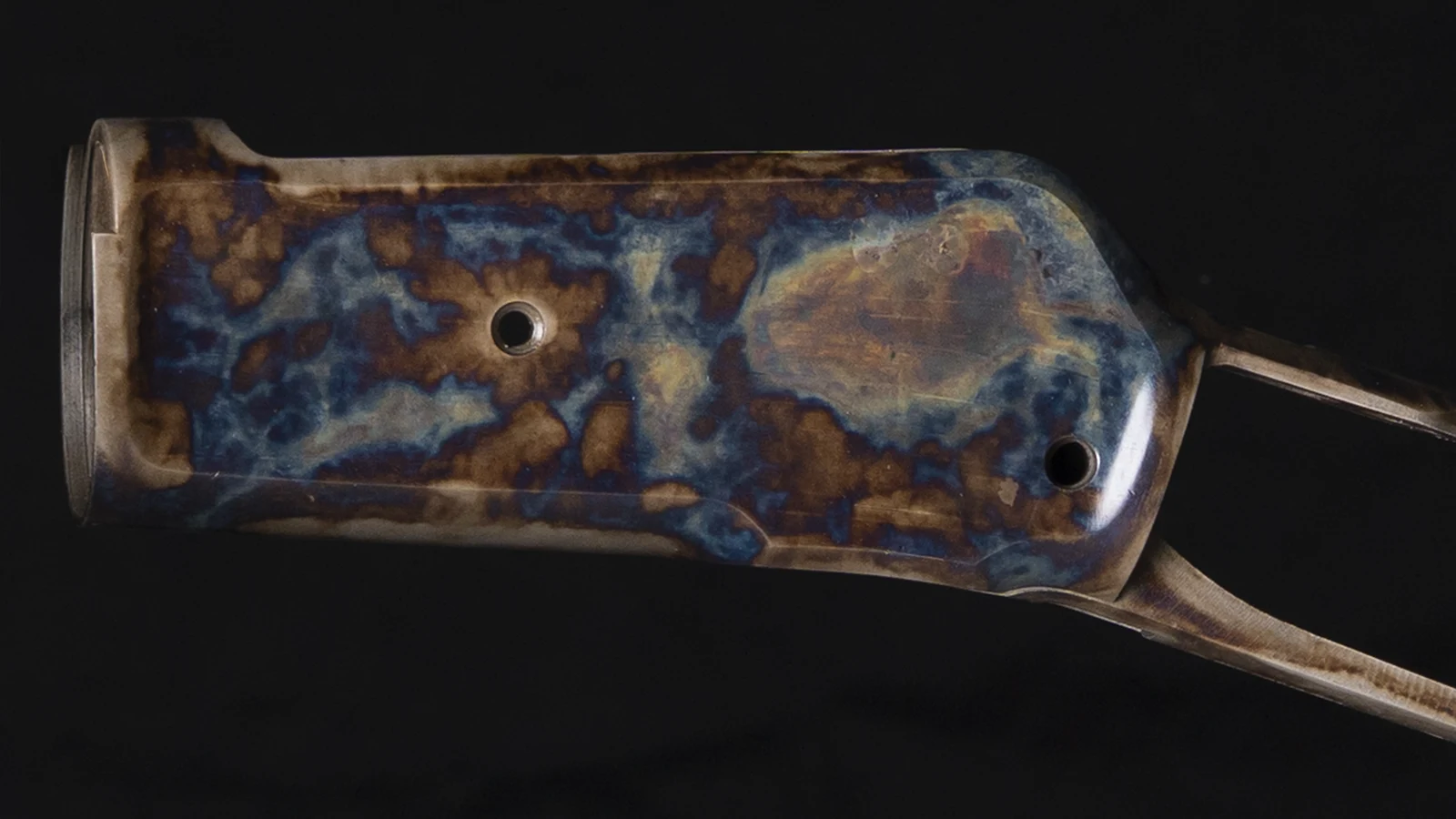
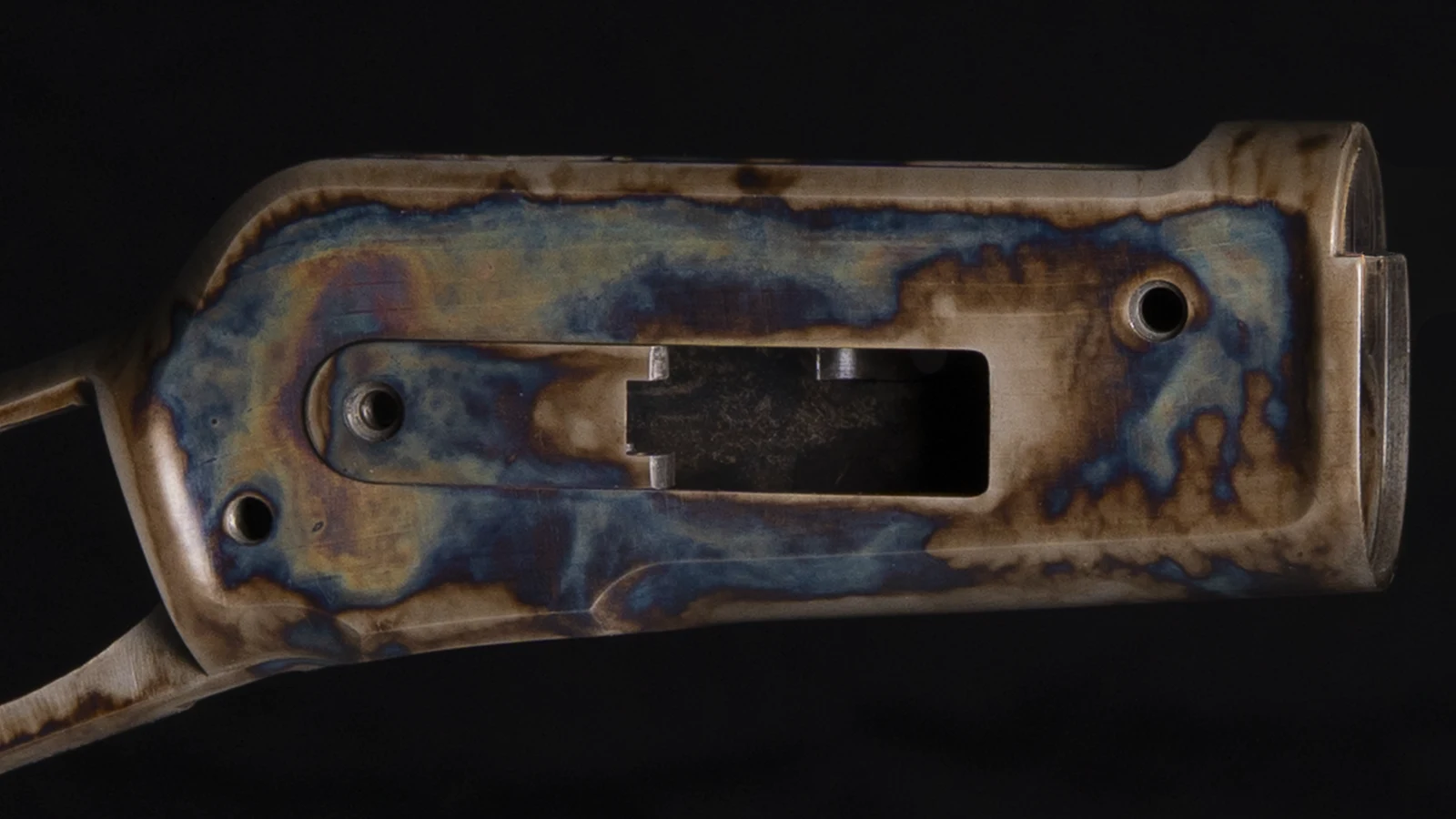

Bone charcoal color case hardening on both sides of a Winchester 1886 receiver.
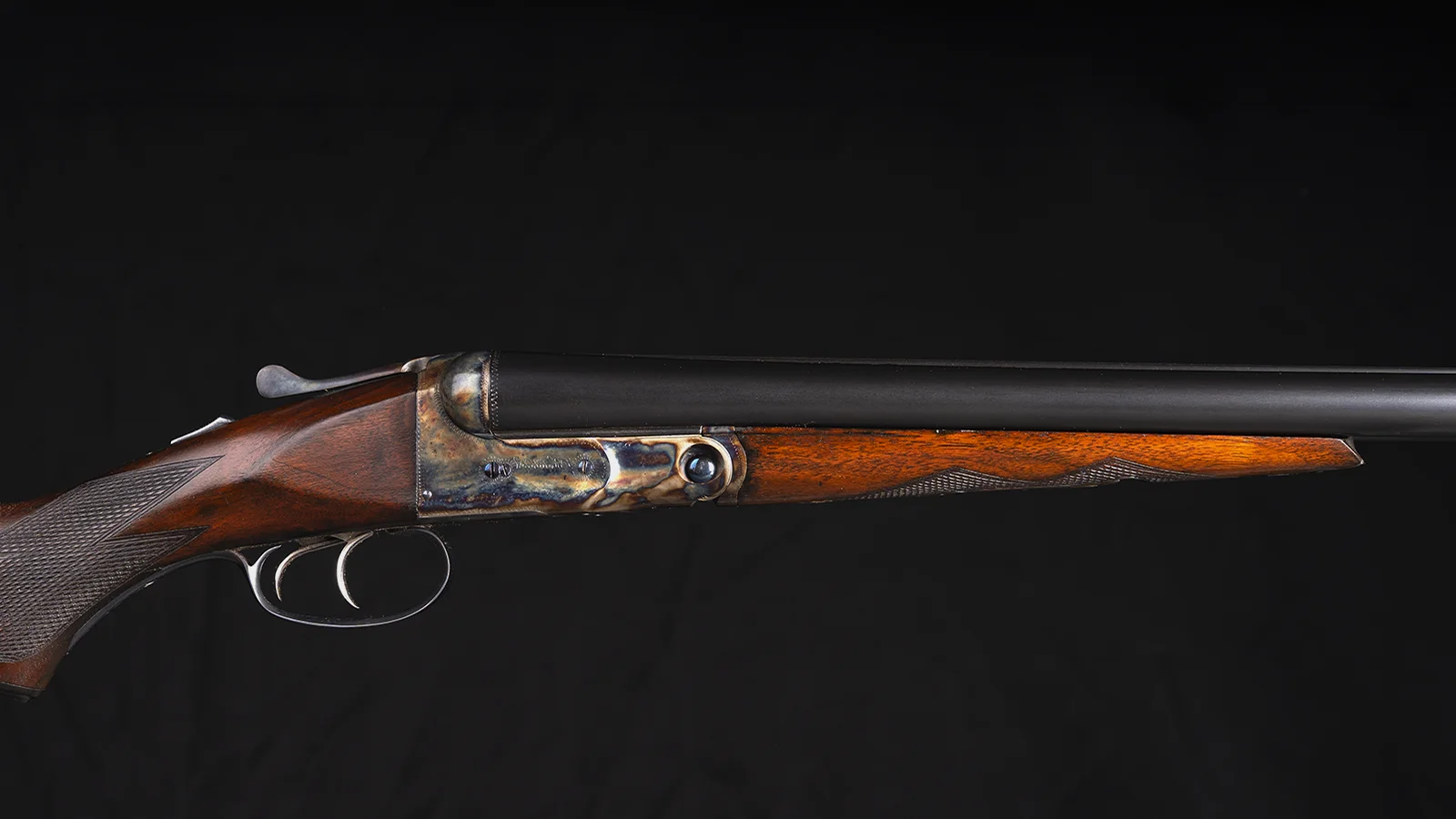
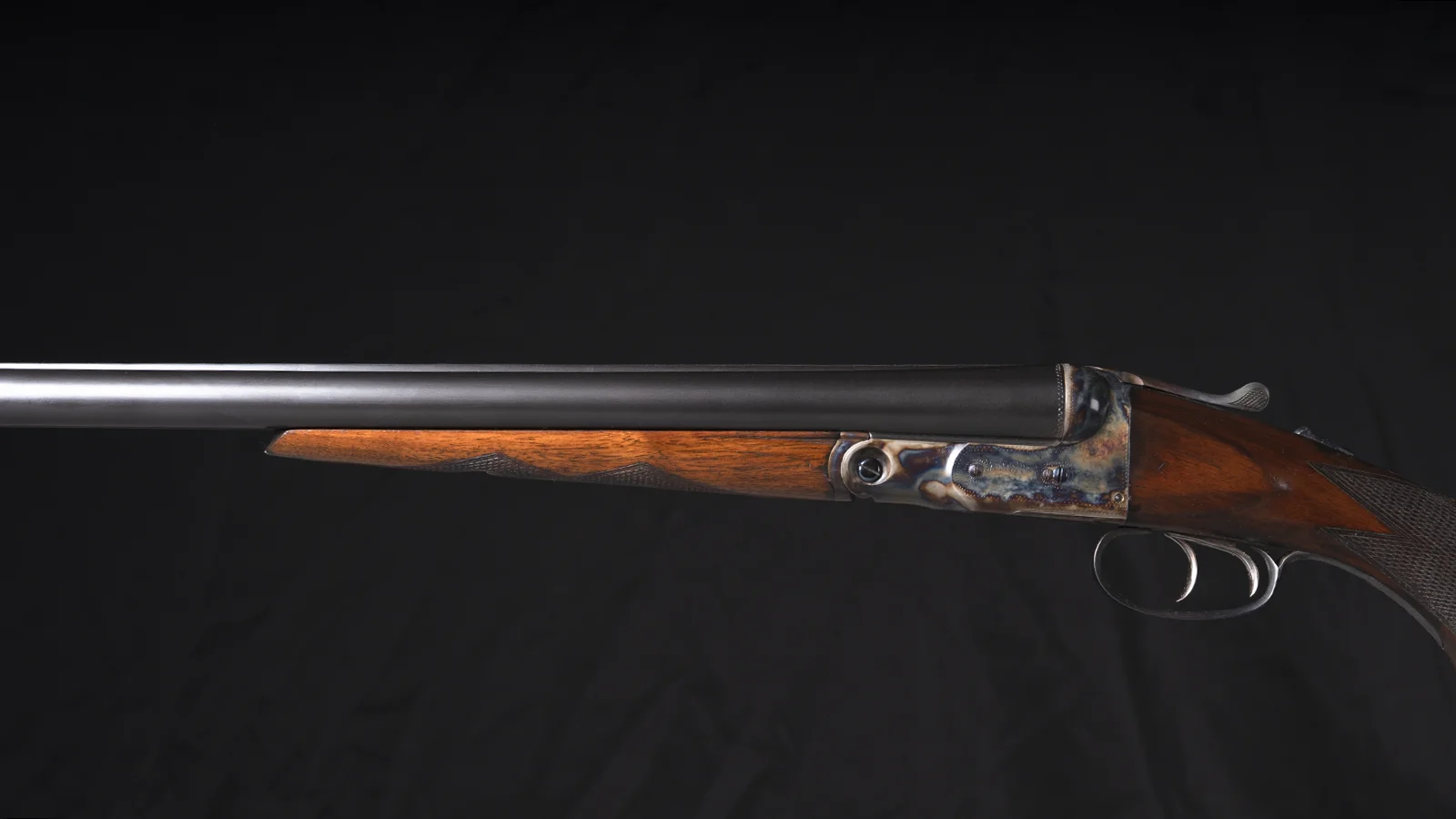
Bone-charcoal case coloring and slow rust-blued barrels on a restored Parker VH double gun.
Common Bone Charcoal Case Coloring Questions
Considering This Finish for Your Firearm?
Tell us about your firearm, its condition, and what you would like to accomplish. We'll help determine the appropriate finish and level of preparation for your project.